We know that casting a ballot in the voting booth involves politics, values and personalities. But before you ever push the button for your candidate, your brain has already carried out an election of its own to make that action possible. New research from Vanderbilt University reveals that our brain accumulates evidence when faced with a choice and triggers an action once that evidence reaches a tipping point.
The research was published in the October issue of Psychological Review.
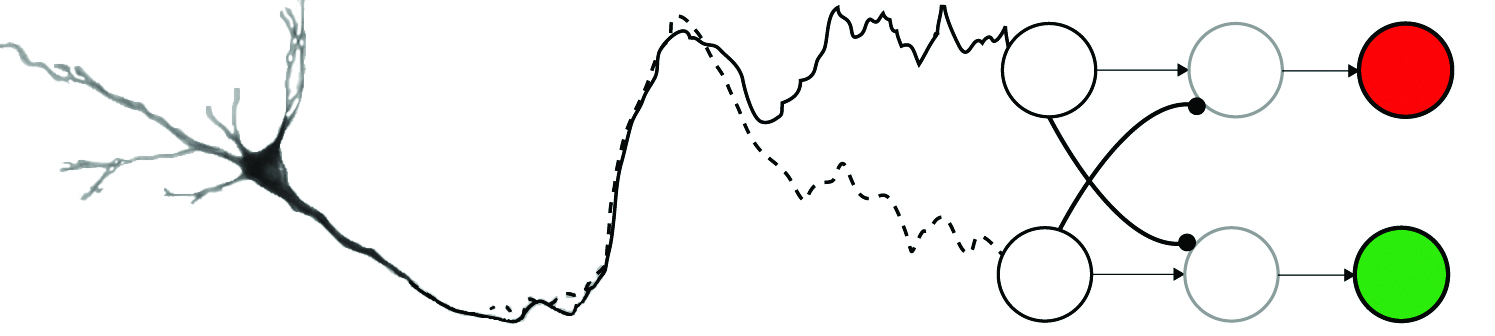
鈥淧sychological models of decision-making explain that humans gradually accumulate evidence for a particular choice over time, and execute that choice when evidence reaches a critical level. However, until recently there was little understanding of how this might actually be implemented in the brain,鈥� Braden Purcell, a doctoral student in the Department of Psychology and lead author of the new study, said. 鈥淲e found that certain neurons seem to represent the accumulation of evidence to a threshold and others represent the evidence itself, and that these two types of neurons interact to drive decision-making.鈥�
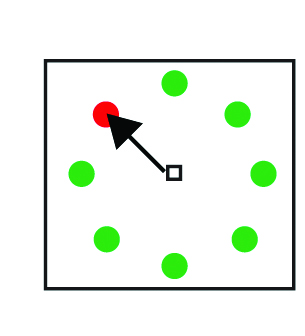
The researchers presented monkeys with a simple visual task of finding a target on a screen that also included distracting items. The researchers found that neurons processing visual information from the screen fed that information to the neurons responsible for movement. These movement neurons served as gatekeepers, suppressing action until the information they received from the visual neurons was sufficiently clear. When that occurred, the movement neurons then proceeded to trigger the chosen movement.
The researchers also found that the movement neurons mediated a competition between what was being seen鈥攊n this case, the target and distracting items鈥攁nd ensured that the decision was made to look to the proper item.
鈥淲hat the brain seems to do is for every vote it receives for one candidate, it suppresses a vote for the other candidate, exaggerating the differences between the two,鈥� Jeffrey Schall, E. Bronson Ingram Chair in Neuroscience and co-author of the study said. 鈥淭he system that makes the response doesn鈥檛 listen to the vote tally until it鈥檚 clear that the election is going towards one particular candidate. At that point, the circuitry that makes the movement is triggered and the movement takes place.鈥�
The findings offer potential insights into some psychological disorders.
鈥淚mpairments in decision-making are at the core of a variety of psychological and neurological impairments. For example, previous work suggests that ADHD patients may suffer deficits in controlling evidence accumulation,鈥� Purcell said. 鈥淭his work may help us to understand why these deficits occur at a neurobiological level.鈥�
An important piece of this research is the novel model the researchers used in the study. The new model combined a mathematical prediction of what they thought would transpire with actual data about what the neurons were doing.
鈥淚n a model, usually all the elements are defined by mathematical equations or computational expressions,鈥� Thomas Palmeri, associate professor of psychology and a co-author of the study, said. 鈥淚n our work, rather than coming up with a mathematical expression for the inputs to the neural decision process, we defined those inputs with actual recordings from neurons. This hybrid model predicts both where and when the eyes move, and variability in the timing of those movements.鈥�
鈥淭his approach provides insight between psychological processes and what neurons are doing,鈥� Schall said. 鈥淚f we want to understand the mind-brain problem, this is what solutions look like.鈥�
The research was supported by the Temporal Dynamics of Learning Center, the National Science Foundation, the Air Force Office of Scientific Research, the James S. McDonnell Foundation and the National Institutes of Health as well as Robin and Richard Patton through the E. Bronson Ingram Chair in Neuroscience.
Palmeri is director of graduate studies for the graduate program in Psychological Sciences and co-director of the Perceptual Expertise Network. Schall is director of the Center for Integrative Cognition and Cognitive Neuroscience, director of the Vanderbilt Vision Research Center, and a Vanderbilt Kennedy Center for Research on Human Development investigator. Additional co-authors on the study were Richard P. Heitz, Jeremiah Y. Cohen and Gordon D. Logan.