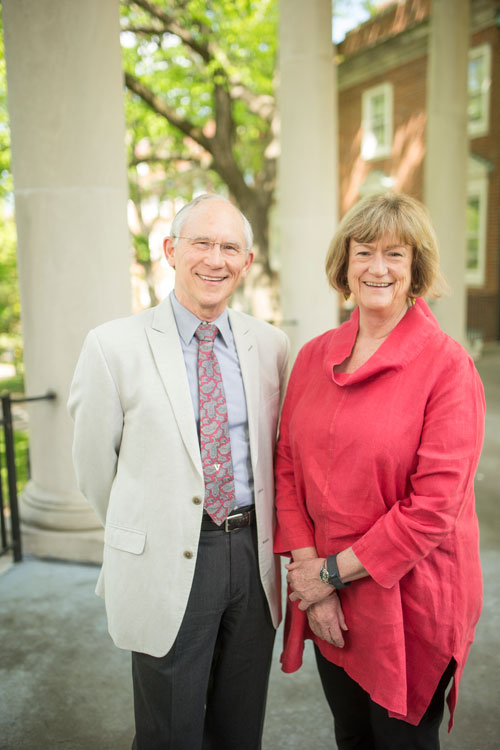
America has been too quick to invest in prekindergarten programs without a clear strategy for success, according to a new Vanderbilt University report.
Dale Farran and Mark Lipsey鈥攁uthors of the landmark Tennessee Voluntary Pre-K Effectiveness Study鈥攆ound that academic gains achieved by students in Tennessee pre-K classrooms began to fade out by first grade and vanished by third grade.
Inconsistent curriculum implementation and variable teacher quality were cited as likely key contributors, as well as a lack of supports for children鈥攁ll who come from low-income families鈥攚hen they reached the second and third grade.
Now the researchers have a new report, published by in which they share similar challenges they observed in other states鈥� pre-K programs.
鈥淭he idea that a year of pre-K can close the achievement gap for at-risk children is appealing to policymakers, school administrators, businessmen and law enforcement officials, but this kind of magical thinking doesn鈥檛 benefit children,鈥� said Farran, Antonio and Anita Gotto Professor of Teaching and Learning at Vanderbilt鈥檚 of education and human development.
鈥淓xpansions are being conducted without much attention to the question of how to design and support those programs so they are effective.鈥�
Many education stakeholders still cite the successful pre-K programs of the 1960s and 1970s鈥擯erry Preschool Project and the Abcedarian Project鈥攁s a blanket endorsement of all pre-K programs. However, it should be noted that those 鈥淐adillac programs鈥� were expensive聽and provided intense interventions that do not compare to current state-funded programs.
Many policymakers also cite positive evaluations of state programs鈥攄espite the fact that many were conducted or commissioned by the state departments of education that administer the programs鈥攔esulting in weak and misleading research.
鈥淚f the (evaluators) adopted a more critical approach, the reports policymakers base their decisions on would be more forthright about the limitations of the studies and less rosy about their conclusions,鈥� said Mark Lipsey, co-lead investigator and research professor at Peabody Research Institute. 鈥淭hey would also acknowledge the considerable difficulty of implementing an effective program at scale and avoid claiming or implying that scale-up had been successfully accomplished.鈥�
That鈥檚 not to say the researchers believe pre-K can鈥檛 work. Many programs have been found to provide significant positive effects, and the early gains when entering kindergarten are well documented. But to maximize and continue these gains, education stakeholders must be able to identify which features of those programs are responsible for success before scaling up, and provide resources for students beyond kindergarten and the early grades to keep the gains on an upward trajectory, they said.
The (BSPA), publisher of Behavioral Science & Policy, is a nonprofit organization launched in 2012 to facilitate the application of rigorous behavioral science research to enhance real-world policy solutions.