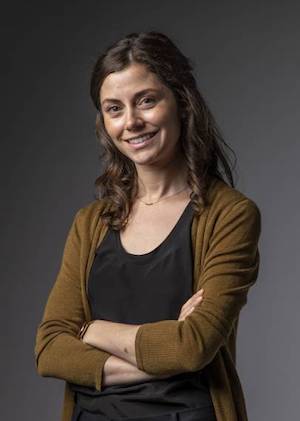
A small but impactful shift in the way a group assignment is presented can significantly reduce racial inequality within the group, as well as lead to better work, according to new research by , assistant professor of sociology at Vanderbilt University. , co-authored with at Texas A&M University and at Kent State University, appears online in the September 2018 issue of .
Previous research has shown that groups often diminish the contributions of minorities, by dismissing their opinions more often, for example, or by being less likely to adopt their ideas. Manago and her colleagues sought to discover whether reframing the parameters of a group task could reduce that inequality, and how that would impact the quality of the group鈥檚 work.
鈥淧ast research shows that people with different skills working together is good for group performance, but relatively little research has been done on how superficial differences that shouldn鈥檛 matter, like race, affect group performance,鈥� Manago said. 鈥淲e found that when people are more willing to listen to the minority group member, the group does better.鈥�
The experiment
For their experiment, the researchers put together groups of three volunteers composed of two white women and one Mexican-American woman to work on a problem-solving task once a week for three weeks. Each week, they were asked to rank the importance of 12-15 of scenario-specific items to survive in one of three dangerous places: the desert, the sea, and the moon.
For each week鈥檚 scenario, each volunteer was instructed to first create her own ranking, then work with the other two women in her group to develop the ranking they would submit as their collective answer.
The prompt
On the first day of the experiment, the control groups were told that some participants would be better at the task than others, and that the researchers were studying what makes some groups more successful than others.
The experimental groups were told something slightly different: They were told that the task required drawing from a wide variety of skills and that no single person in a group was likely to possess all of the abilities required to succeed. This, the researchers theorized, would shift the volunteers鈥� expectations about their own competence as well as their groupmates鈥�.
Each week, the researchers not only evaluated the quality of the group answer, but compared it to the individual answers to see how well individuals performed against the group, as well as see who changed their minds. This allowed the researchers to measure deference鈥攖he frequency with which an individual changed their minds during a disagreement鈥攁s well as synergy鈥攖he ability of a group to outperform any single individual in the group.
Inequality reduced
In the control group, the white participants consistently exhibited the lowest levels of deference鈥攖hey were much less likely to change their minds to agree with the Mexican-American group member than the reverse. In the experimental group, however, where the participants were told everyone had something of value to contribute, the white women deferred more frequently to the Mexican-American women than they did in the control group.
Interestingly, the researchers noted, this did not hold true for one of the tasks: the lost-at-sea scenario. Feedback from the volunteers suggested that this was an especially difficult task鈥攍ikely because a number of the seafaring items in the list were unfamiliar, such as a sextant, and therefore difficult to rank. 鈥淚n that case, we believe the presence of uncertainty, unfortunately, caused people to fall back into old habits,鈥� Manago said.
Synergy increased
Finally, the researchers found that the experimental groups outperformed the control groups. By the end of the experiment, the experimental group was 40 percent more likely than the control group to achieve some synergy, and 20 percent more likely to achieve a lot.
鈥淭hat was a really cool finding,鈥� Manago said, 鈥渂ecause not only does it say that diversity is good for diversity’s sake, it says diversity improves us and makes us better as a team.鈥�
The research was supported by NSF Grant 0961940.