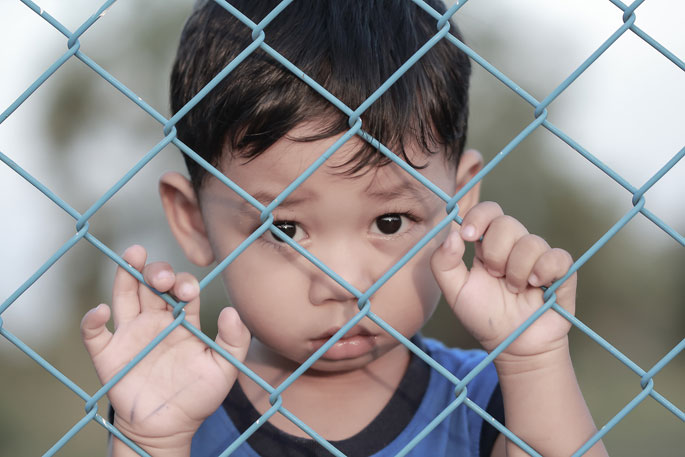
The practice of separating immigrant children from their parents is very likely to lead to negative effects on emotional and mental health, according to an invited paper in The Journal of Clinical Child and Adolescent Psychology penned by Vanderbilt University psychology professor .
“Exposing children to such high levels of stress puts them at an elevated risk for psychopathology in the future, including depression and anxiety.”
鈥揔athryn L. Humphreys
鈥淩ecent changes in the U.S. immigration system have resulted in a large number of children removed from their parents, drawing increased scrutiny to this abhorrent practice,鈥� Humphreys said. 鈥淓xposing children to such high levels of stress puts them at an elevated risk for psychopathology in the future, including depression and anxiety, aggressive behaviors, attention-deficit/hyperactivity disorder, attachment disorders, language deficits and social difficulties.鈥�
The youngest of these children, who have been detained in so-called 鈥渢ender age鈥� shelters, may be the most vulnerable to the stress of separation, according to Humphreys鈥� recent study published by Developmental Science. She finds that children who experienced stressful or traumatic experiences in their earliest years鈥攂irth to age 5鈥攚ere found to have reduced hippocampal volume when they reached adolescence. Reduced HV is associated with memory issues, learning difficulties and depression.
鈥淢any members of the lay public, public officials and even scientists perpetrate a pernicious belief that if children cannot remember something, it does not affect them. This could not be further from the truth,鈥� Humphreys said. 鈥淥ur research finds that infants and young children up to age 5 are particularly affected by experiences of stress and trauma. Children belong in families that are safe and supportive and substitute group-based care is insufficient to meet their emotional needs.鈥�
The practice of separating immigrant children from their parents at borders as a deterrent is counterproductive, Humphreys said.
鈥淪tudies show that parents separated from their children due to immigration enforcement report鈥� an intention to return to the United States following deportation with a goal of reuniting with their children,鈥� she said. 鈥淚n other words, their love for their children motivated the seeking of safety and opportunities in a new country as well as the willingness to face detention to reunify with those separated children.鈥�
- Read Humphreys鈥� invited paper, 鈥溾�� in this month鈥檚 issue of Journal of Clinical Child and Adolescent Psychology.
- Read in Developmental Science.
Learn more about Dr. Humphreys
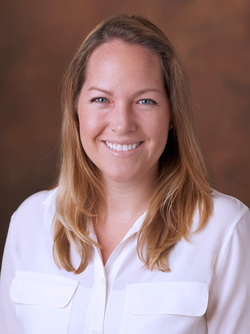
- is an assistant professor of psychology at Vanderbilt鈥檚 of education and human development.She is the director of the 聽and a member of the . She is trained as a clinical psychologist and has expertise in infant mental health. She was named an APS Rising Star by the Association for Psychological Science in 2018.
- Humphreys鈥� work centers on identifying pathways to the development of psychopathology. She focuses on caregiving experiences in early life, with a particular interest in identifying targets for prevention and intervention. Her research includes tools from neuroscience, including magnetic resonance imaging as well as biological markers of aging and health.
- Humphreys鈥� research is supported by the ; the Brain and Behavior Research Foundation; the National Science Foundation; Klingenstein Third Generation Foundation; Jacobs Foundation; and the Stanford Precision Health and Integrated Diagnostics Center.