As the U.S. Supreme Court prepares to decide whether to hear a case challenging the use of race-conscious college admissions, Vanderbilt scholar听听says a ban on affirmative action would substantially narrow the pipeline of minorities coming into professional occupations.听听
In a听听in the听Tulane Law Review, Hersch听analyzed听data on almost 500,000 college graduates to show a close connection between听attending听an elite undergraduate institution and the likelihood of earning a professional or graduate degree, which, in turn,听is closely linked to听gaining听employment in influential positions.听
鈥淪ociety as a听whole benefits听from diverse professionals and leaders,鈥� said Hersch, Cornelius Vanderbilt Professor of Law and Economics. 鈥淎ffirmative action supports entry to elite education, which enables underrepresented minorities to reach leadership positions where they can provide services to their communities and challenge policies that perpetuate racism in a variety of industries and professions.鈥�听
The听case of听Students for Fair Admission v. Harvard,听which听challenges the use of race-conscious affirmative action, is on the U.S. Supreme Court鈥檚 list for consideration听in its June 10, 2021, conference.听听
Hersch, who is also a co-founder of Vanderbilt鈥檚听JD/PhD joint degree program in law and economics,听explained听that听there are long-lasting societal benefits that result from听affirmative action policies in college admissions.听By听developing a pipeline of future听leaders and professionals, there听is a greater likelihood that they will听advocate for and听serve their听communities.听听
Leadership roles in the United States are听also听disproportionately held by graduates of elite universities,听she said,听so affirmative action policies听regarding admissions听play an important role for underrepresented minority students.听听
Based on data from the National Survey of College Graduates听between 2003 and 2017, only 2听percent of those with a bachelor鈥檚 degree from a听non-selective听Tier 4 institution earn an advanced degree from the most selective private institutions in Tier 1. By听contrast,听24 percent of those with an undergraduate degree from a Tier 1 institution听go on to receive a graduate or professional degree from a similar Tier 1 university.听听
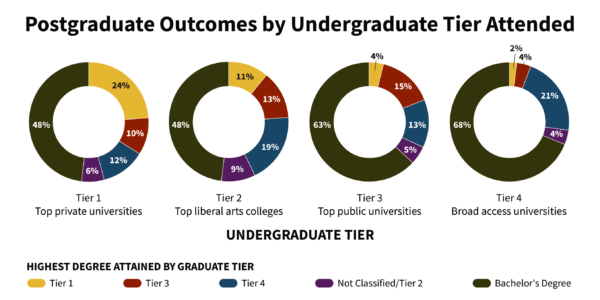
Once students graduate from an elite Tier 1 school, race becomes听a relatively unimportant predictor of听attaining a听professional or graduate degree, according to Hersch鈥檚 analysis. Further, among students who听earn an MD or JD听from a Tier 1 institution, there is no difference by race or ethnicity in the probability of being licensed in the profession.听听
Hersch听said听these findings indicate听that听attending听an elite undergraduate听institution听levels the playing field for all races听in terms of attaining professional or graduate degrees,听regardless of听whether听affirmative action听initially听played a role听in undergraduate admissions.听听
鈥淲ithout a critical mass of undergraduates in the pipeline to earn听elite听credentials,鈥�听Hersch听said, 鈥渢he current underrepresentation of minorities in leadership and professional roles will be further exacerbated.鈥澨�听