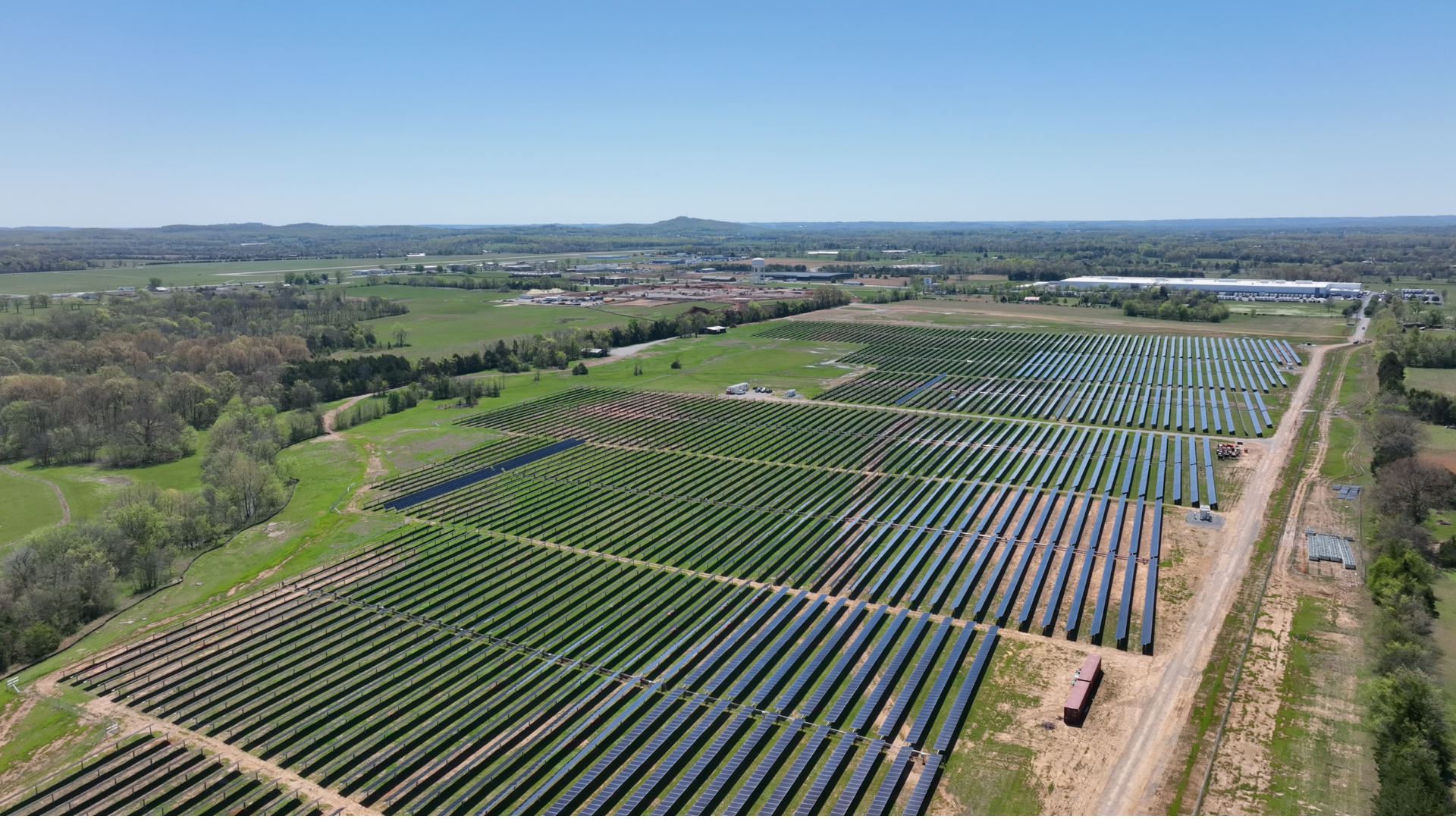
Vanderbilt University will help expand access to clean energy in Brownsville, Tennessee, while further offsetting the institution鈥檚 carbon footprint鈥攖hanks to the second of three solar farms being developed through the university鈥檚 multiyear collaboration with Clearloop, a subsidiary of Silicon Ranch, an alumni-founded solar company based in Nashville.
Vanderbilt鈥檚 latest investment in solar energy will be in a small rural community in central Haywood County, about 60 miles east of Memphis. It is expected that 107,985 metric tons of carbon dioxide equivalent will be offset over the life of the Brownsville project, which will provide low-cost clean energy to approximately 600 local homes annually through the local power company, Brownsville Energy Authority.

鈥淚 look forward to the second phase of Vanderbilt鈥檚 investment with Clearloop to decarbonize the grid and broaden clean energy access in the Southeast,鈥� said , vice chancellor for administration. 鈥淭wo of Vanderbilt鈥檚 core values are to be a good citizen of our region and to make our campus more sustainable. By investing in providing clean energy for Brownsville in West Tennessee, we are able to achieve both these goals.鈥�
About Brownsville
There are approximately 17,000 residents in Brownsville with a 57 percent minority population.
With a rich history in civil rights and music, Brownsville has put a priority on economic development. It is home to the West Tennessee Delta Heritage Center and the birthplace of the late musical icon Tina Turner. Haywood County played a significant role in Tennessee civil rights history with Black voter activism and 鈥淭ent Cities鈥� that were set up for evicted African American tenant farmers during the 1960s. Today, Haywood County is the location for Blue Oval City, a $5.6 billion all-electric Ford vehicle manufacturing facility scheduled to open next year.
Clearloop expects construction of the solar farm project to be completed in 2025. 鈥淲e are excited for the next steps on this journey with Vanderbilt, with whom we share a passion for bringing clean energy projects to life that both maximize the carbon impact on the grid and drive investment in historically under-invested areas,鈥� said , CEO and co-founder of Clearloop.
The Brownsville solar project will be developed, owned, and operated by its parent Silicon Ranch for the lifetime of the project. Through this disciplined and community-focused approach, Clearloop will maintain a long-term vested interest in the West Tennessee region.
Educational Initiatives on Campus
Several new educational initiatives have 鈥渂lossomed鈥� from the university鈥檚 collaboration with Clearloop, including internship opportunities at Silicon Ranch for Vanderbilt students.
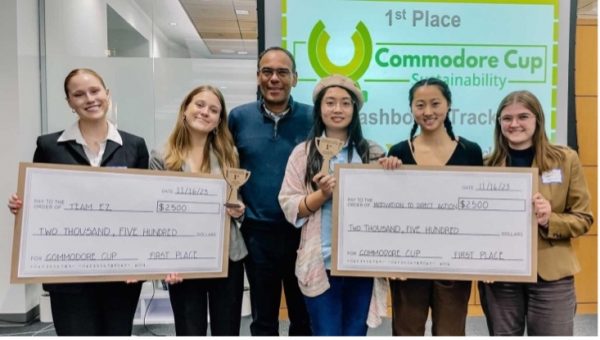
Clearloop partnered with , Vanderbilt鈥檚 Innovation Center, last year on the inaugural , a 10-week innovation challenge centered around sustainability themes. One of the two tracks challenged students to create an interactive dashboard encouraging Vanderbilt stakeholders to take part in the university鈥檚 commitment to climate action. Clearloop supported the challenge, and Zapata served as one of the judges.
In addition, the university鈥檚 Environmental Health, Safety and Sustainability team in the Division of Administration works closely with Clearloop and Vanderbilt faculty to explore collaborative research opportunities. Eleven students are enrolled this spring in Perceptions of Solar Energy Research, a sociology course taught by Zdravka Tzankova, associate professor of the practice of climate studies. Davis Recht, a Clearloop intern, serves as the teaching assistant. With the help of Clearloop鈥檚 community partners, students are interviewing leaders in Jackson, Tennessee, and Batesville, Mississippi鈥攖wo rural areas with active solar facilities鈥攖o gather qualitative data and analyze how perceptions of solar energy are shifting.
Additional Clean Energy Initiatives at Vanderbilt
Offsetting Vanderbilt鈥檚 carbon footprint through high quality, direct investments into grid decarbonization is an important part of Vanderbilt鈥檚 sustainability strategy because it offers a practical way to address the university鈥檚 carbon footprint in the short term鈥攚hile investing in the overall decarbonization of the university鈥檚 grid as Vanderbilt works simultaneously to lower the amount of carbon dioxide emissions that need to be covered by an offset.
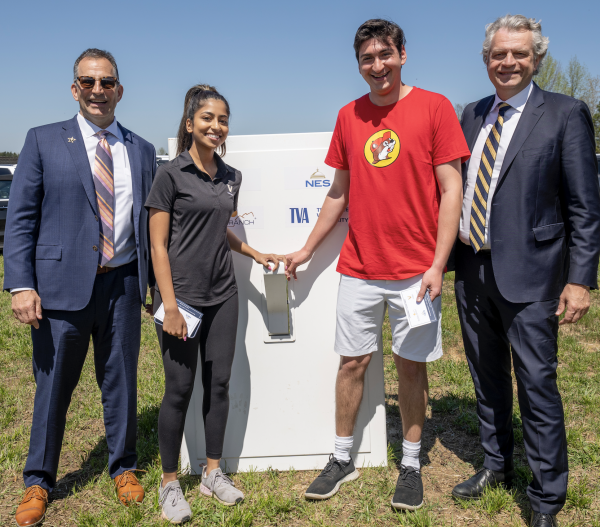
In April 2023 the university 鈥渇lipped the switch鈥� on the 35-megawatt Vanderbilt I Solar Farm in Bedford County, Tennessee. Silicon Ranch is the landowner and operator, investing more than $50 million to install the Vanderbilt I Solar Farm, which will ultimately offset approximately 70 percent of the university鈥檚 greenhouse gas emissions produced indirectly from electricity purchased from Nashville Electric Service and TVA. A planned second solar farm in Moore County, Tennessee, will supply renewable energy to mitigate a portion of the remaining emissions from purchased electricity.
Vanderbilt鈥檚 first solar energy project with Clearloop is in Batesville, Mississippi鈥攁 diverse community at the intersection of the Mississippi Delta and the Appalachian foothills. The project will help avoid 128,058 tons of CO2 over the life of the project and serve approximately 1,000 Batesville homes after its expected completion during fall 2024.
In 2021, Vanderbilt first achieved carbon neutrality decades ahead of its original 2050 goal. All of the offset programs listed above, plus additional efforts and initiatives within the university to lower its carbon footprint, contribute to maintaining Vanderbilt鈥檚 carbon neutral status.
To learn more about Vanderbilt鈥檚 sustainability efforts, visit and read about how the university鈥檚 greenhouse gas emissions have dropped 35 percent since 2015 in the .
About Clearloop
Clearloop creates carbon solutions for organizations of all sizes, from global corporations to small businesses and educational institutions, to decarbonize the economy, expand access to clean energy, and accelerate the development of new solar projects in American communities where optimal economic and environmental benefits can be achieved.