
By Jenna Somers
Scholars at of education and human development travel across oceans and borders to answer pressing questions on improving the human condition, a mission shared by scholars the world over who collaborate in partnership with Peabody.
To strengthen this mission and advance Peabody鈥檚 global reach, the will expand its strategy to include Peabody Global Initiatives. Peabody Global Initiatives will support faculty to pursue international research and disseminate knowledge, as well as to develop impactful partnerships and networks through a culturally and contextually responsive, collaborative, and data-driven approach.
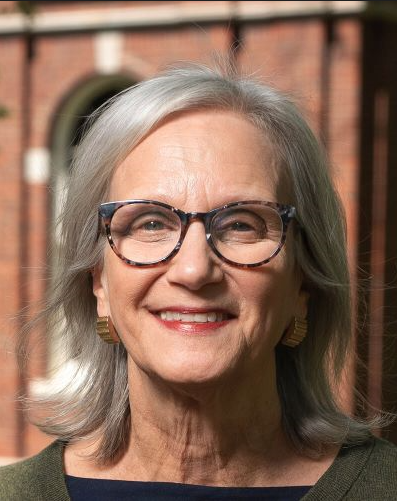
鈥淧eabody Global Initiatives reflects our commitment to crossing geographical boundaries through research and partnerships in education and human development,鈥� said , Patricia and Rodes Hart Professor of Education and Leadership and vice dean of Peabody College. 鈥淎s we continue to expand on our recent global engagement successes we will further support faculty to collaborate around the world to develop and research policy and practice that strengthens learning and human development.鈥�
Research collaborations led by Peabody faculty members in Vietnam and Colombia and Peabody-hosted visits of exemplify the types of international engagements that Peabody Global Initiatives will support, connecting even more Peabody scholars to the world and inviting scholars the world over to Peabody.
Improving Mental Health in Vietnam
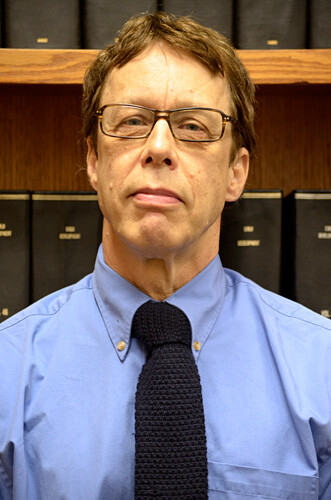
Since 2001, Research Professor of Psychology and Human Development聽 has spearheaded programs to develop and improve clinical psychological services and research capacity throughout Vietnam and across broader Southeast Asia, with funding from the National Institutes of Health. Now, he is helping to develop Vietnam鈥檚 licensure criteria for clinical psychologists, and as part of his primary efforts at capacity development, he and his team are adapting, implementing, and evaluating a mindfulness-based program for adults with depression within Buddhist pagodas.
Vietnam recently passed a law, scheduled to take effect in about five years, that will require psychologists to become licensed, a policy that comes in response to 10 years of advocacy by Weiss and his colleagues at Vietnam National University and other institutions. Centrally involved in the policy transition, Weiss is consulting with the Vietnamese Ministry of Health on structuring requirements for psychologists and for clinical programs鈥� training and accreditation. His team is also assessing the quality of psychotherapy services throughout the country.


鈥淲e鈥檙e investigating the extent to which treatments are evidence-based and implemented following an evidence-based intervention (EBI) structure. We鈥檙e also investigating providers鈥� credentials and how patients find providers, whether through internet searches, word of mouth, or seeing a TV show or advertisement. As part of this project, we will interview providers to assess their understanding of EBI factors and psychotherapy. Moving toward licensure has taken some time, but we are very excited at the prospect of improving mental health services in Vietnam,鈥� Weiss said.
Even as mental health services improve, they are often stigmatized, leaving many people hesitant to seek treatment. However, in preliminary studies, Weiss and his colleagues have found that people are much more comfortable receiving treatment for depression and other mental health problems through non-traditional mental health sites, such as schools or pagodas, as compared to traditional settings, such as hospitals or clinics.
鈥淥ne interesting issue is that mindfulness-based programs, which are strongly EBI, originated from Buddhist meditation, but have been intentionally developed as non-religious. The goal of mindfulness interventions is to focus one鈥檚 attention on the present moment鈥攈ow your body feels, what thoughts are going through your head鈥攂ut without judging or evaluating these experiences, seeing them simply as 鈥榚xperiences.鈥� This helps reduce automatic acceptance of negative thoughts and feelings such as those linked to rumination, one underlying causal factor of depression,鈥� Weiss said.
He and his colleagues are piloting the mindfulness-based program with Buddhist monks and community leaders so that they can help treat adults with depression. This approach鈥攃ommonly known as task-shifting鈥攖rains non-professionals to provide a limited, targeted mental health program, which research has shown to be effective for extending mental health services. Importantly, the program should be able to support people with depression who might otherwise not seek mental health services.
Closing the education equity gap in Colombia

More than 11,000 miles from Vietnam, in Bogot谩, Colombia, researchers from Vanderbilt University and William & Mary may have found a promising approach to education reform that could help provide high-quality education to students from low-income families. Results from a聽聽on the quality of public-private partnership schools in Bogot谩鈥攌nown as schools in administration鈥攄emonstrate that students enrolled in these schools scored higher in cognitive and social-emotional skills than students of similar socio-economic and demographic backgrounds who did not enroll. Parents and guardians also reported higher satisfaction with the schools in administration and a lower likelihood of transferring to another school.
Much like charter schools in the United States, schools in administration are privately managed but publicly funded. Colombia seeks to leverage both sectors to more efficiently use public resources to provide a better-quality education to students from low-income backgrounds. To ensure the quality of these schools, the government holds them to the same accountability standards as public schools. Furthermore, non-profit organizations selected by the government to manage these schools must demonstrate prior experience managing high-quality private schools.
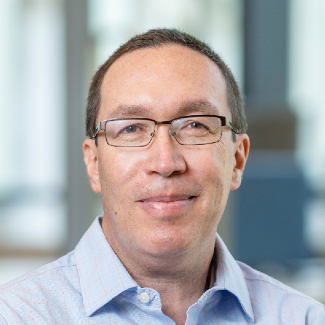
鈥淭he benefits in cognitive and social-emotional outcomes for students at these schools could potentially shift the approach to public education in Colombia. Based on the positive results for students and the satisfaction of parents, these schools not only deliver a quality education, but they promote community confidence,鈥� said聽, the study鈥檚 principal investigator and associate professor of public policy, education, and economics at Vanderbilt聽 College.


Students鈥� cognitive skills鈥攖hose related to thinking, learning, and problem-solving鈥攚ere measured by the聽. Those with superior scores on the test demonstrated better social understanding, emotional health, and well-being. Parents of students in schools in administration seemed to notice the enhanced quality, as only 10 percent of them indicated a desire to change schools, compared to 37 percent of parents whose children were not enrolled in these schools.
While the findings from the study offer promise for the future of providing cost-effective, quality education to students from low-income families in Colombia, the researchers say it is vital to further study the performance, benefits, and characteristics of schools in administration. Key to the validity of the findings is that the students鈥� profiles鈥攁s determined by socio-economic status and demographic background鈥攚ere identical, except whether they attended a school in administration.
Learning from Global Scholars in Residence
Just as Peabody scholars like Barrera-Osorio seek to improve education equity, so too, do the Vanderbilt聽Global Scholars in Residence who visited Peabody College this spring. , associate professor in the Department of Mathematics and Science Education at Bo臒azi莽i University in Istanbul, Turkey, was hosted by , professor of psychology. , professor of applied linguistics and director and dean of the Institute of Education at University College London, was co-hosted by , professor of the practice of teaching and learning; , professor of science education and chair of the聽 补苍诲听, professor of the practice of teaching and learning and associate chair.
Serkan 脰zel

脰zel collaborates with academic, industry, and non-governmental organizations to leverage innovative STEM education approaches that empower students from disadvantaged communities. He also works with educators on implementing social justice classroom practices to support the educations of ethnically minoritized students in Turkey.
During his visit, 脰zel presented three lectures on the importance of reaching Turkey鈥檚 disadvantaged and marginalized students at an early age through STEM education to expand their career horizons in STEM fields. The聽 聽and the聽 hosted two of 脰zel鈥檚 lectures.
In particular, girls and students from low-income and rural areas often struggle to envision futures in STEM careers because they lack exposure to STEM fields and educational resources. Furthermore, the Kurdish and Romani communities face significant educational challenges, often as a result of systemic barriers and cultural biases. Recognizing the importance of inclusive education, 脰zel offers professional development to teachers so they can introduce STEM concepts to students in a manner that respects and incorporates their identities and cultural backgrounds, thereby fostering a more inclusive and supportive learning environment.
Rittle-Johnson, an expert in mathematical learning and cognition, also provided guidance to 脰zel on his multi-national study that uses eye-tracking technology to investigate how pre-K and kindergarten students understand and act on patterning tasks. The project could improve early math education by advancing understanding of how young children learn and develop critical math skills.
鈥淩eturning to Vanderbilt University as a Global Scholar was a deeply enriching experience, feeling like a homecoming two years after my sabbatical,鈥� 脰zel said. 鈥淭he visit was highlighted by engaging discussions and fruitful collaborations, especially with the invaluable support of Professor Bethany Rittle-Johnson. Her guidance has been crucial, not only for our professional projects but also for personal growth, fostering an environment of continuous learning. This trip reinforced the strength of our partnership and left me optimistic about the future of our collaborative projects and initiatives, further solidifying the foundation for ongoing mutual enrichment.鈥�
Li Wei

Li studies bi- and multilingualism, focusing on the neuroscience of multilingualism, children鈥檚 acquisition of multiple languages simultaneously, cognitive and socio-cultural impacts of learning multiple languages, and the decisions of bi- and multilingual families and communities about which language to use with whom and when.
During his visit, Li gave a talk on translanguaging, a philosophy of multilingual communication, which, in practice, allows multilinguals to naturally integrate and flexibly use all their languages and other communication resources to develop and convey meaning.
鈥淢ultilinguals not only can speak in multiple named languages, but they also navigate variations in tone and style of verbal and non-verbal communication depending on social contexts. When embraced and fully utilized, their wealth of communicative knowledge benefits all learners,鈥� Li said.
Translanguaging originated as an idea to give multilingual learners more agency over their learning and understanding. It has been applied as a pedagogical approach for educating minoritized and racialized bi- and multilingual learners, in analysis of translingual practices and other forms of communication, and as a practical theory of language and communication with multilinguals that capitalizes on their rich language repertoires.
These varied uses of translanguaging have disrupted thinking on how to educate multilingual learners, creating more space for all learners to collectively use their full range of communication resources and to challenge educational practices that prioritize learning in one language 鈥攐ften in ways that inhibit the education of minoritized and racialized students.
In addition to presenting lectures, 脰zel and Li met with Peabody leaders and faculty members, including , Patricia and Rodes Hart Dean of Education and Human Development, , associate dean for international students and affairs,聽and , Patricia and Rodes Hart Professor of Education and Leadership and vice dean, to discuss potential collaborations between their institutions and Peabody College.
Advancing Universal Issues
Whether in Vietnam or Colombia, Turkey or the United Kingdom, or on Peabody鈥檚 campus in Nashville, Tennessee, mental health and education equity resonate as universal concerns that require universal inquiry from the best scholars across the globe. But these are not the only issues that inspire the global consciousness, and that is why Vanderbilt鈥檚聽 awarded ten Peabody faculty members funding to support visiting scholars, conference travel, and research collaborations in 2024 and 2025.
These awards reflect Peabody鈥檚 commitment to worldwide collaboration that enhances learning and development in diverse contexts and translates discoveries into more effective practice and policy. In spring and summer 2024, Peabody scholars presented at conferences in Belgium, the United Kingdom, and Thailand with the support of Global Engagement Travel Grants. In fall 2024, two faculty members are collaborating on Global Engagement Research Seed Grants with colleagues in Australia, China, Singapore, and Taiwan. Additionally, Peabody will host Vanderbilt Global Scholars in Residence from France, Israel, and India in spring 2025. Expanding on these efforts, Peabody Global Initiatives will bring together even more of the world鈥檚 education and human development scholars to forge new collaborations and to strengthen existing ones, to create new knowledge and to disseminate findings far and wide. Enhancing the human condition depends on it.
This article includes content originally published during the 2023-2024 academic year on December 12, April 5, February 14, May 6, and May 31.听